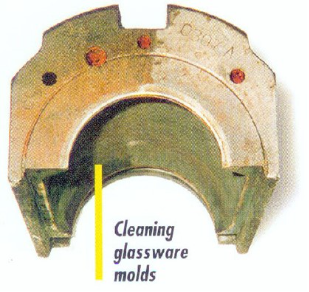
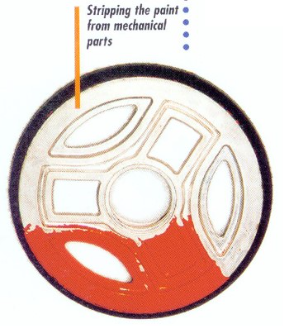
In August 2007, our Beijing TOP product business further expanded by successfully adding the Laserblast laser cleaning machine business from the French company Quantel. This expansion enriches our product line and enables us to provide customers with more comprehensive industrial cleaning solutions.
Laserblast specializes in laser cleaning and surface pre‑treatment. Compared with traditional methods, Laserblast offers high‑technology, efficient, and cost‑effective solutions for applications such as preserving architectural appearances, professional cleaning, and industrial surface pre‑treatment.
The Laserblast product series features fiber‑optic transmission of the laser beam, allowing the laser to reach the surface of the object to be cleaned. This design provides excellent cleaning performance, high ergonomic usability, and allows the equipment to be easily and quickly integrated into robotic and other automated systems.
Laser cleaning technology is a rapidly developing new cleaning method that has been advancing at a fast pace over the past decade. Thanks to its unique advantages and irreplaceability, it is gradually replacing traditional cleaning processes in many fields.
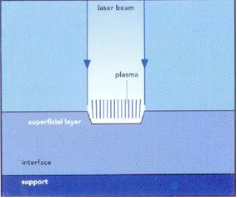
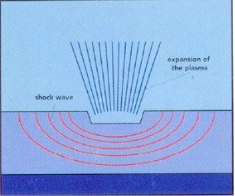
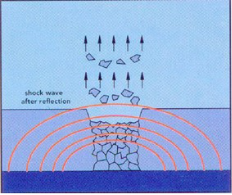
Traditional industrial cleaning involves a wide variety of cleaning methods, most of which rely on chemical solvents and mechanical techniques. In China, as environmental regulations become increasingly strict and awareness of environmental protection and safety continues to grow, the types of chemical agents that can be used in industrial cleaning are becoming more limited. Finding cleaner, non‑damaging cleaning methods has therefore become an issue that cannot be ignored. Laser cleaning, with its non‑abrasive, non‑contact, thermal‑effect‑free characteristics and applicability to a wide range of materials, is considered a reliable and highly effective solution. At the same time, laser cleaning can address problems that traditional methods are unable to solve. For example, when sub‑micron‑scale contamination particles are tightly adhered to a workpiece surface, conventional cleaning methods often fail to remove them, while irradiating the surface with nanosecond laser pulses proves highly effective. Moreover, because laser cleaning is a non‑contact process, it is extremely safe for cleaning precision components or delicate areas, and the accuracy of the workpiece can be well preserved. As a result, laser cleaning holds a unique advantage in the cleaning industry.
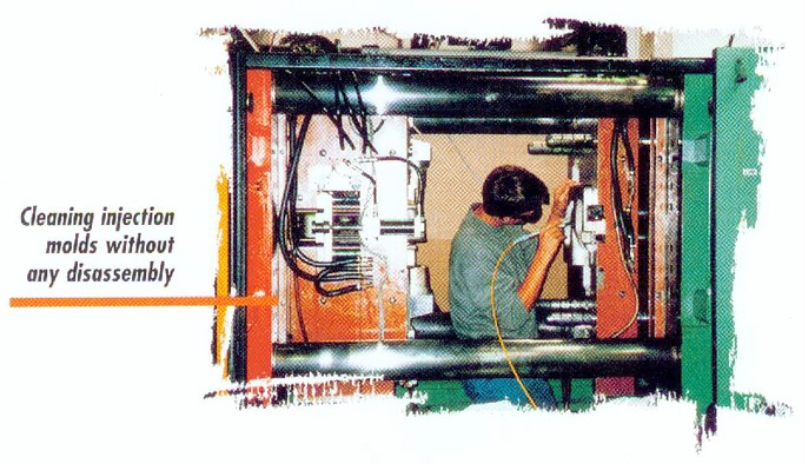
Advantages of Laser Surface Cleaning
Compared with traditional cleaning methods such as mechanical friction cleaning, chemical corrosion cleaning, liquid/solid high‑impact cleaning, and high‑frequency ultrasonic cleaning, laser cleaning offers clear advantages.
Laser cleaning is a “green” method: It does not require any chemical agents or cleaning liquids. The waste removed consists mainly of solid powder, with small volume, easy storage, and good recyclability, which can readily solve the environmental pollution problems caused by chemical cleaning.
Non‑abrasive and non‑contact cleaning: Traditional methods are often contact‑based and exert mechanical forces on the surface, which can damage the object or leave the cleaning medium adhered to the surface as secondary contamination. The non‑abrasive and non‑contact nature of laser cleaning effectively overcomes these issues.
Remote and flexible operation via optical fiber and robots: Laser beams can be transmitted through optical fibers and combined with manipulators or robots, enabling convenient remote operation and access to areas that are difficult to reach with traditional methods. This is particularly valuable in hazardous environments, where it can help ensure personnel safety.
High selectivity and excellent cleanliness: Laser cleaning can remove a wide variety of contaminants from the surfaces of different materials, achieving a degree of cleanliness that conventional methods cannot reach. At the same time, contaminants can be selectively removed from the material surface without damaging the underlying material.
High cleaning efficiency: Laser cleaning is fast and time‑saving, significantly improving the cleaning process efficiency.
Low operating cost and high automation potential: Although the initial investment for a laser cleaning system is relatively high, the system can be operated stably over the long term with low running costs—typically only a few euros per hour. More importantly, laser cleaning can be easily integrated with automation, enabling fully automated operation.